
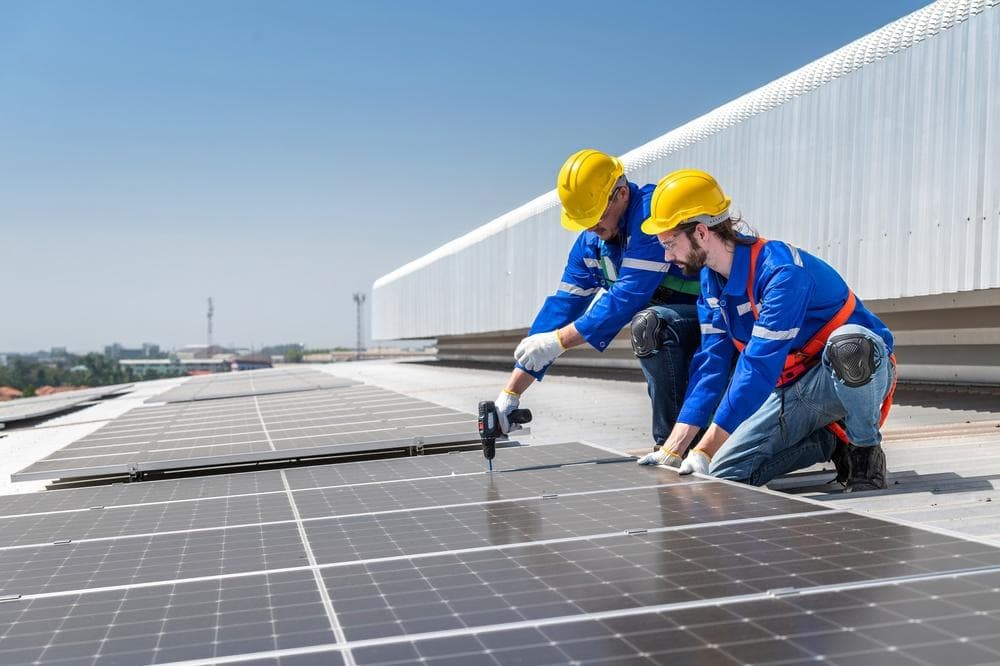
Key Takeaways
Choosing the right solar panel system for commercial buildings in Thailand starts with two structural decisions: whether to own the system through an EPC model or use the electricity through a PPA, and which panel technology can hold its output under high heat and humidity. Building type, roof condition, and daytime load profile then determine how much of the electricity bill solar can realistically offset. For a straightforward starting point, businesses can review MEAei’s solar rooftop Thailand service to see how each option compares in practice.
Rooftop solar has become a mainstream option for reducing that exposure. Still, the range of hardware, financing models, and permit requirements can make it difficult to compare quotes on equal terms.
This guide sets out the practical questions Thai businesses should work through before selecting a commercial solar panel system, so the final decision fits both the building and the balance sheet. For most Thai businesses, especially manufacturing plants, cold storage, and commercial buildings, electricity is a major ongoing expense. Behavioural adjustments alone offer little savings due to peak-time pricing and consistent heavy equipment usage.
How do Solar EPC and Solar PPA compare for commercial use?
The financing of a solar system is a key decision for executive teams before reviewing panel data sheets, as they must decide whether to own the system or just purchase its electricity. This presents two distinct commercial paths in Thailand.
Solar EPC (Engineering, Procurement, and Construction) — the ownership route.
- How it works: the company funds the project through cash, retained earnings, or a green business loan, and takes full title to the equipment.
- Financial upside: the business keeps 100% of the electricity savings and can claim tax benefits available for renewable-energy investment.
- Payback: The payback period depends on system size, electricity consumption, tariff structure, and the level of self-consumption. Eligible businesses may also benefit from applicable tax incentives, subject to the relevant criteria.
Solar PPA (Power Purchase Agreement) — the service route.
- How it works: a qualified developer funds, installs, and maintains the system on the client’s roof for a contract term of roughly 15 to 20 years.
- Cost profile: the business pays no capital cost and no maintenance fees.
- What you pay: the client agrees to buy the solar electricity generated at a discount to the standard MEA or PEA tariff, usually in the range of 10% to 15%. But note that the actual discount achieved will depend on the specific contract terms of the project.
Both models can help businesses reduce electricity costs, but the financial outcome depends on the project’s investment structure, electricity consumption, and contract terms.
Choosing solar panels built for Thailand’s climate
Panel selection in Thailand is not the same exercise as in cooler European or North American markets. Standard test conditions rate panels at 25°C, while rooftop cell temperatures in Bangkok regularly exceed 55°C during the middle of the day.
Humidity is high for much of the year, and monsoon squalls place real loads on mounting systems. When comparing quotes for the best solar panels for commercial use in Thailand, three engineering markers matter more than headline wattage.
- Temperature coefficient: panels lose a percentage of their rated output for every degree above 25°C. Older P-type modules can lose around 0.35% to 0.45% per degree, which adds up quickly under a Thai sun. N-type TOPCon and heterojunction (HJT) modules typically show temperature coefficients closer to 0.29% per degree, so they hold more of their nameplate capacity when the roof is hottest.
- Resistance to potential-induced degradation (PID): in high-humidity climates, moisture and voltage stress can cause a slow loss of output over time. Tier-1 modules with certified PID resistance protect the yield the system was sized for.
- Wind-load rating on the mounting system: commercial flat roofs and factory metal sheeting require structures certified to handle the wind pressures common during Thai monsoon season. A well-specified mount protects both the panels and the roof itself over the 25-year life of the system.
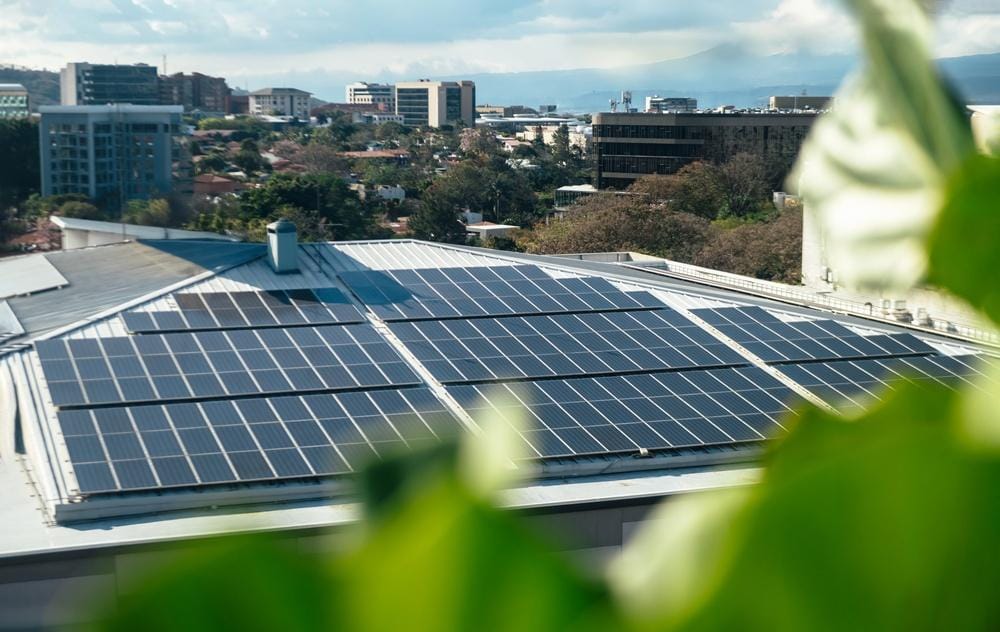
Which commercial buildings in Thailand suit rooftop solar?
Some buildings are not well-suited for rooftop solar installations. Optimal returns are typically seen when daytime electricity demand closely matches solar generation times, and the roof structure can safely support the extra weight.
Strong candidates for a commercial solar rooftop include:
- Daytime manufacturing plants (automotive, electronics, injection moulding): operational peak between 8:00 and 17:00 can align well with solar generation, which can increase on-site solar consumption and improve project economics.
- Cold storage and 24-hour warehousing: continuous refrigeration draws steady power throughout the day, which can support a stronger business case for rooftop solar.
- Shopping malls and hypermarkets: large uninterrupted roof areas paired with high daytime HVAC loads.
Buildings that usually need preparation or reconsideration:
- Asbestos-cement roofing: under Thai regulations, the roof must be replaced before a solar system can be permitted.
- Limited structural capacity: roofs that cannot safely carry an additional 15 to 20 kilograms per square metre need engineering review or reinforcement first.
- Short-lease warehouses: facilities with fewer than 15 years remaining on the tenancy usually struggle to recover the investment within the lease term.
A framework to right-size your commercial array
Sizing is where many commercial projects lose value. A system that is too small leaves savings on the table; one that is too large exports surplus power at low rates and takes longer to pay back.
If you’re operating a Thai business, here’s a four-step framework to help arrive at the right capacity for your solar panel system for commercial buildings.
- Size against the lowest daytime load, not the highest: using a typical Sunday or a low-production day as the baseline prevents building capacity that will only ever be exported. Self-consumption is where the strongest financial return sits.
- Check the available grid connection and transformer capacity: the applicable utility’s technical requirements (MEA or PEA) and the facility’s existing electrical infrastructure can affect the maximum feasible system size.
- Review the company’s tax position: businesses already covered by a full BOI tax exemption for their core operations gain limited additional benefit from EPC-related tax measures, which often makes a PPA the stronger financial fit.
- Confirm the operations and maintenance terms: dust and airborne particulates in Thai industrial zones can reduce panel output by several percent over a year if the modules are not cleaned. A clear service-level agreement covering scheduled cleaning, inverter monitoring, and response times keeps the system performing at its designed output.
Talk to MEAei about your commercial solar project
Choosing the correct commercial solar rooftop involves financial and regulatory considerations just as much as engineering ones. A comprehensive project plan integrates tariff structure, tax implications, roof integrity, and ongoing maintenance, a feat challenging to achieve through separate bids.
MEAei provides an end-to-end solar rooftop Thailand service designed around this reality. We provide:
- Site assessment and load-profile modelling to recommend the EPC or PPA structure that fits your cash flow and tax position.
- Permit and regulatory coordination with relevant authorities, including MEA, PEA, ERC, and DIW, as applicable to the project.
- Climate-appropriate hardware backed by an operations and maintenance agreement.
To discuss the best fit for your facility, or to request a feasibility study, contact our engineering team at MEAei for a solar system installation service tailored to your operations.
References:
- Solar Incentives in Thailand 2026: Market Guide and Incentives. Retrieved on 20 August 2026 from https://www.surgepv.com/blog/solar-incentives-in-thailand
- Solar Panels For Hot Climates: Mastering Temperature Coefficient In PV System Selection. Retrieved on 20 August 2026 from https://www.sunpalsolar.com/solar-panels-for-hot-climates-mastering-temperature-coefficient-in-pv-system-selection/
- How to Get Solar Permits in Thailand: MEA and PEA Step-by-Step Guide. Retrieved on 20 August 2026 from https://www.greenenergythailand.com/posts/get-solar-permits-thailand/
- How humidity-driven PID effect silently reduces solar panel performance in tropical passages. Retrieved on 20 August 2026 from https://www.sealite.com/how-humidity-driven-pid-effect-silently-reduces-solar-panel-performance-in-tropical-passages/
Frequently Asked Questions About Commercial Solar Rooftop in Thailand
Q: What is the best solar rooftop system for businesses in Thailand?
A: The best system is the one sized to the building’s daytime load, using panels rated for high-heat and high-humidity operation, and financed under the structure that fits the company’s tax position. In most cases, this is either a Solar EPC project (if the business wants to own the asset and use tax incentives) or a Solar PPA agreement (if it prefers to reduce electricity costs with no upfront capital).
Q: What are the best solar panels for commercial use in Thailand?
A: For Thai commercial rooftops, Tier-1 N-type TOPCon or heterojunction (HJT) modules generally perform better than older P-type panels, because their lower temperature coefficient preserves more output under high heat. Certified PID resistance and a wind-load rating suitable for monsoon conditions are also important.
Q: What type of commercial buildings in Thailand are suitable for solar panel installation?
A: Buildings with high daytime electricity use and structurally sound roofs are the best candidates. This includes daytime manufacturing plants, cold-storage warehouses, 24-hour distribution centres, shopping malls, and hypermarkets. Buildings with asbestos roofing or limited load capacity usually need remediation work before solar installation is possible.
Q: How long does a commercial solar panel system take to pay back in Thailand?
A: Commercial solar systems can offer attractive payback periods, depending on system size, electricity consumption, tariff structure and investment model.